83MetalCraft LLC services help create products and parts for a wide range of industries. They use various metalworking techniques like shearing, punching, forming, cutting, welding, and more.
Industries like mining require heavy machinery parts, conveyor systems, and structural supports that can endure abrasive operational environments. Military applications call for components that meet stringent standards and complex designs.
Design & Engineering
Metal fabrication is an industry-wide process that shapes everything from small electronics housings to large construction structures. The best metal fabricators are able to work with a wide variety of materials, and they use a variety of methods to create customized products. The most common metal fabrication processes include cutting, forming, welding, and machining.
Cutting is the first step in the fabrication process, and it involves separating raw materials into smaller pieces. This can be done using mechanical means like sawing or shearing, or thermal methods such as laser or plasma cutting. Cutting can also include other operations like sanding and grinding to prepare the metal for further processing.
The next step in the process is bending, which uses a press brake or similar machine to bend metal into specific angles and shapes. This is a vital part of the process for creating structural metal parts, and it’s often used in construction projects, automobile production, and aerospace engineering. This method of fabrication can also be used to create curved shapes for decorative purposes.
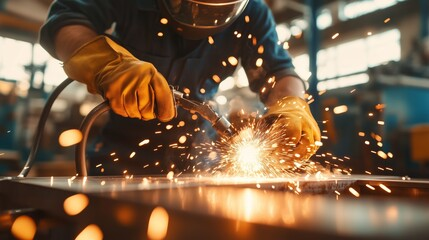
Another critical part of the metal fabrication process is welding, which joins metal components together using heat from a torch or other sources. This is a necessary part of most fabrication projects, and it’s important to choose a metal fabricator with experience in all aspects of the welding process.
Some fabricators specialize in one particular type of fabrication, such as CNC machining. Others offer a full range of services that cover all aspects of the fabrication process. In general, it’s more cost-efficient to work with a full-service fabricator, and this can reduce the amount of time it takes for a project to get from concept to completion.
Machining
A metal fabrication company that offers machining services provides the final step in turning raw materials into actual products and structures. It is considered a value-added process because it involves cutting, bending and assembling of the actual metal product or structure rather than merely creating shop drawings and blueprints to intended measurements.
During the machining phase, technicians use various metalworking tools to cut and shape raw material into the desired design. Depending on the type of metal, these tools can include punching, drawing, milling, turning and drilling. Punching is a process that uses a hardened metal punch to make holes in a sheet or rolled metal, often with a die that cuts out a slug of scrap material from the hole’s perimeter.
The drawing and milling phases of machining create patterns in the metal’s surface. They can be decorative or functional, such as a pattern in the metal that reflects light differently to illuminate a building’s exterior. Drawing utilizes a tensile force to pull liquid metal into a tapered die. A machinist can also use a milling tool to cut the metal radially using a circular bit. Turning turns a piece of metal on a lathe, allowing a technician to rotate the metal and cut it axially with a tool as it spins. The turning process can also be used to bore holes in a piece of metal, which can be either circular or non-circular.
When choosing a metal fabricator, be sure to ask if they provide machining services and what types of machines they have available. A company with a large inventory of metal and the right machinery is better equipped to handle a broad range of projects quickly and efficiently. They can then offer a wider selection of options for customers, from simple cutting to intricate machining and finishing techniques.
Forming & Bending
The forming and bending stages of metal fabrication are essential for transforming raw materials into specific designs and structures. This type of metal working can be used in a variety of industries, from automotive to construction. The bending process is particularly effective for pliable materials like aluminum, steel, and copper. For example, a tube of raw material can be run through a series of rollers to bend it into an attractive shape before being welded to create solid tubing.
There are a number of different operations that fall under the forming and bending category, including casting, forging, punching, drawing, and turning. These processes can be applied to a wide range of materials, from steel and aluminum to stainless steel and copper. They can also be performed on a variety of thicknesses, which allows for an even greater range of design options and functionalities.
Fabricators can also use a lathe to shape a piece of metal symmetrically around an axis, which is especially useful for creating round parts or components. Lathes can come in a wide variety of sizes, from small ones that are ideal for making watches to massive machines designed to shape crankshafts.
Forming and bending are both critical to metal fabrication, but they require a unique set of skills and equipment to perform effectively. Experienced fabricators will understand the requirements of each type of metal and how it responds to forming and bending, as well as the appropriate tools and machinery to use. They will also take into account the expected longevity, durability, and performance of the finished product when calculating costs for tooling, raw materials, and production runs. This information can help them develop a cost-efficient manufacturing plan that will deliver a high-quality result within the desired timeframe and budget.
Cutting
When it comes to cutting metal, fabricators remove excess material in order to shape the base of a product or structure. This can be done through a variety of methods, depending on the desired outcome of the project and the raw materials at hand. Some of these include punching, which uses a tool that works like scissors to cut the metal in a pre-designed pattern. Drawing, another method, creates raised portions in the base metal – this can also be done using a milling machine and produces non-circular perforations. Shearing is used to make longer cuts on sheet metal. This process combines two tools, one that makes the cut and a second that ejects the slug or scrap.
Other cutting processes include milling, which utilizes rotating cutting tools to remove material from the workpiece until it achieves its desired form. This can be performed manually or with a CNC machine. Other machining techniques are climbing milling, angular milling, face milling, and form milling.
The most common raw materials used for fabrication are steel and aluminum, though other base metals can be utilized as well. These can be purchased in sheet or plate form, bars, rods, or wires. Some types of metals, such as precious ones — gold and silver, for example — are only available in smaller wire or bar forms.
The most common applications for metal fabrication involve construction and machinery. However, the industry has also created structures that are useful in landscaping design. For instance, metal lattices can be used to support plants and create structures that look beautiful. Other examples of landscaping applications for metal fabrication are fences and railings, which both help keep the landscape safe from human traffic.
Welding
Welding is the process of joining parts together by melting them, and then solidifying them as they cool. Typically, it’s used to join metals, but it can also be used to join other materials such as wood or plastics. The heat generated during welding can come from a gas flame, an electrical arc, or even through explosion friction. There are many different welding techniques, but they all produce intense heat that can melt metals and other materials. In welding, a filler metal is often added to help create the joint. This is sometimes known as the ‘filler’ or ‘consumable’ and can be of a different composition than the parent material. Welding can be performed on both open air and in confined spaces such as machines or containers.
There are various types of welding processes, including resistance welding, arc welding, gas welding and electric arc welding. The type of welding technique that’s used depends on the job and the environment in which it’s being carried out. For example, a welding company will use resistance welding when working on large structural components that need to be joined together, but arc welding is better suited for smaller jobs in outdoor environments.
Welding services can also include fusion welding, which is typically used for thin sections of steel and other metals that require good surface finish. This technique can be very accurate and is capable of producing welds that are extremely strong and durable. Welding can also be used to remove imperfections such as dents and scratches from metals. There are also low temperature metal fusing techniques such as brazing and soldering, but they tend to be more expensive than welding and less suitable for high-stress applications.